 By Miami AC Repair by Frosty
Start with the thermostat reading
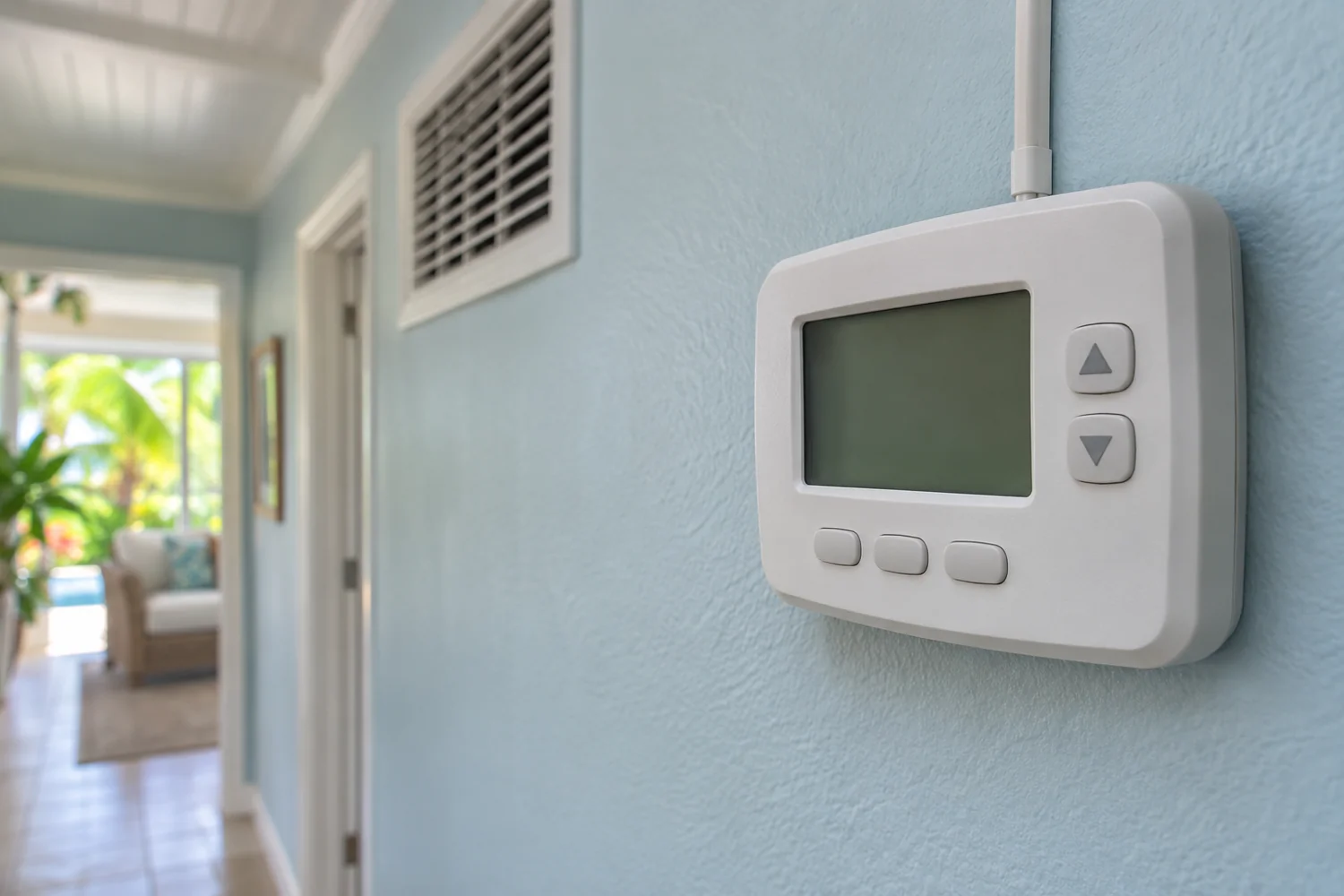
Look at both numbers on the thermostat if your model shows the room temperature and set temperature. Verify that it is in cooling mode and that the set temperature is below the displayed room temperature. If an automatic schedule is active, note the set point the system is actually using. A temporary schedule change can explain why the room stays above the setting you expected to see.
Wait through the normal delay described in the equipment instructions after changing a setting. Then note whether the thermostat indicates an active call for cooling. Some systems keep the indoor fan running as a separate setting. Hearing that fan tells you air is moving through part of the system. Compare it with the outdoor unit and supply airflow to see what changed during the cooling request.
- Thermostat and room temperature
- Air at two or more vents
- Outdoor unit sound or silence
- Time and recent changes
Compare air movement in more than one room
Start at an occupied room near the thermostat. Put your hand near a supply grille and note whether air is moving and feels cooler than the room. Then compare a room farther away. Use the same fan and thermostat settings for both observations. If one room is weak while two other rooms feel normal, write down which one and whether its door was open.
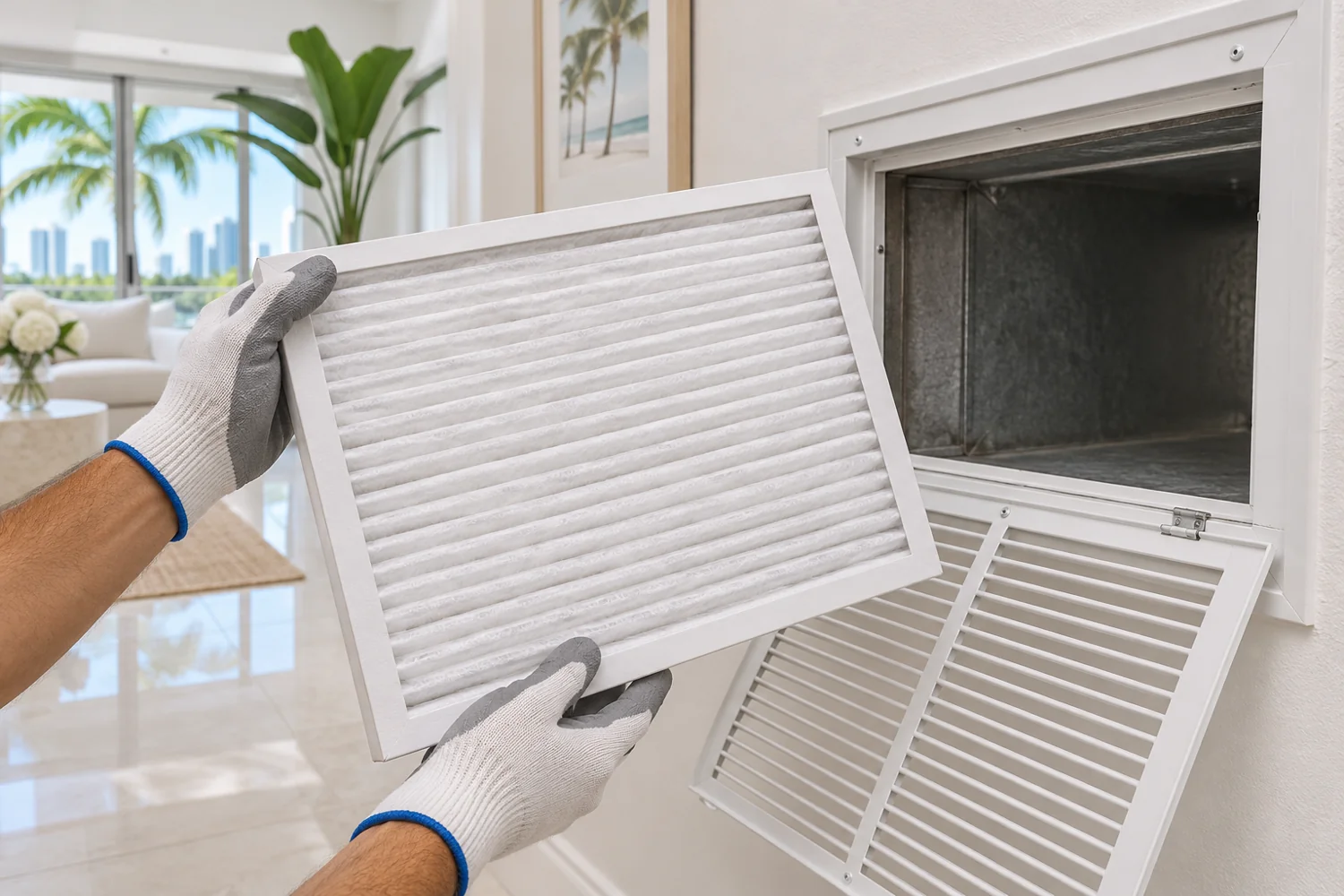
When air is weak throughout the property, check whether a readily accessible return grille is blocked by furniture or stored boxes. If the equipment instructions allow you to inspect the filter, check how long it has been in place and whether it looks heavily loaded. The ENERGY STAR maintenance checklist includes checking the filter regularly. Follow the manufacturer’s directions for the type, size, and installation orientation.
Describe the airflow pattern even if you cannot reach the filter or identify the return. In a condo, a grille that looks similar to your neighbor’s may connect to different equipment. Use the registers inside your unit and ask the building contact about shared mechanical access.
Observe the outdoor unit from a clear path
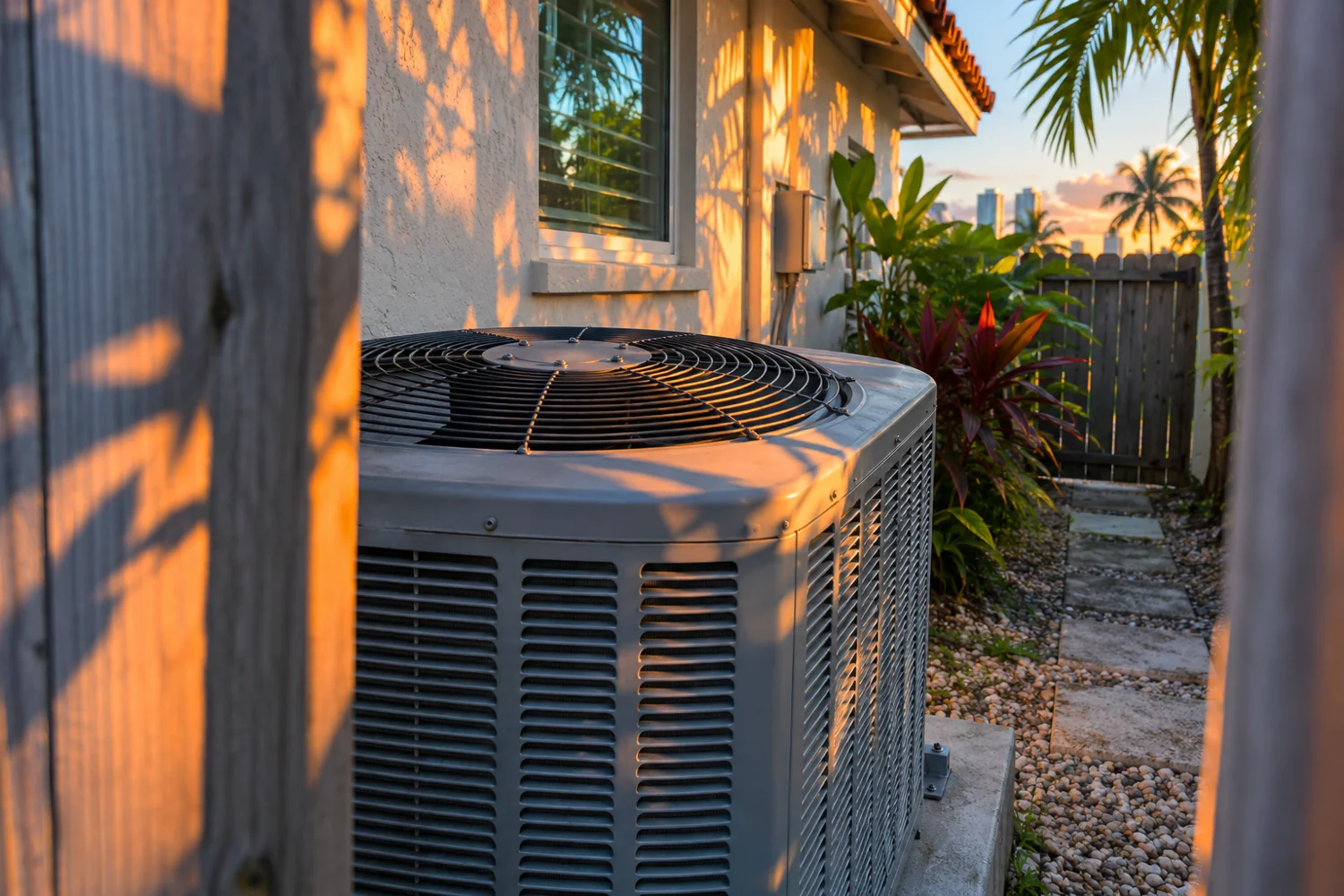
If the outdoor equipment is visible and safely accessible, listen from a clear walkway during an active cooling request. Note whether the whole unit seems quiet, whether the fan is running, or whether you hear it start and stop frequently. Look for obvious changes such as new debris around it from recent yard work. Keep covers closed and stay clear of moving parts.
If you hear the indoor fan while the outdoor unit stays quiet, pass along that exact observation. If you hear both units while the supply air feels warm, say that instead. A technician can check controls, electrical components, airflow, and refrigeration based on what the system is doing. EPA certification requirements apply to work that can release refrigerant. Leave work inside the equipment to a qualified technician.
Condo residents may have no safe view of their outdoor equipment. Tell the service contact it sits on the roof, on a common balcony, or in a shared mechanical area if you know. Ask who can provide access and whether it requires notice.
Describe the pattern in terms a technician can use
Give the approximate time the room started warming and any recent change in the thermostat, filter, or service work. An air conditioner that cools overnight and struggles in the late afternoon behaves differently from one that has gone silent since yesterday. Share a photo of the thermostat during the problem if you can take it from an ordinary accessible position.
Useful notes can be short. For example, at 4 PM the setting was 76 and the displayed room temperature was 81. Air was moving normally in two rooms, it felt similar to room temperature, and the outdoor unit was quiet. The symptom appeared after lunch and returned the following day. Those are observations a technician can compare with what happens during the assessment.
If you see ice or water, include the location. Picture the difference between water on the floor under the handler and an unusual amount of moisture around a single register. Read the air handler water guide for practical details to document.
Know which outcome to ask about
On the first call, share the ZIP code, callback number, equipment access, and the symptoms in their original order. Ask whether there are any preparation steps for that system. If someone needs to unlock equipment space, arrange that through the owner or property manager and confirm when they are available.
After an assessment, ask which finding accounts for the lack of cooling. Ask what is included in the proposal and how operation will be checked after work is completed. If your initial concern was that two rooms stayed warm, use those same rooms after the repair to describe any changes. Temperature, airflow, and the length of a cooling call make useful points of comparison.
For a system that briefly cools and then keeps stopping, keep a few cycle times ready and read the AC short cycling guide. If your system still runs without cooling, request a Miami AC repair assessment and give the Frosty team the notes you can safely collect.
What changes the next conversation
An intermittent problem is a good reason to keep the assessment focused on conditions that can be reproduced. If the system is cooling again when you call, describe the last failed run and ask what someone can check under current conditions. You can share an ordinary watch pattern for the next afternoon, such as noting the time the room begins warming and whether the outdoor equipment changes.
If the property has several systems, label your notes by room or thermostat. A simple line like “downstairs thermostat, kitchen and living room, indoor fan audible” identifies the equipment area more clearly than combining two separate comfort issues. Bring the same notes to any follow-up. If the equipment never runs long enough to compare rooms, report that as part of the original symptom. Keeping the description consistent also helps you ask whether the proposed work resolves the observed problem.